
 By Arturo Tabuyo ·
In the previous entry I mentioned the work of Ekander, Perkins and Richards, published in 2025. It’s the most complete model of casting mechanics I know of. It treats the rod, line, leader and fly as one system, with their mass, stiffness and air resistance, and works out how everything moves during the cast.
A scientific paper isn’t a tool. The equations are all there, but someone has to program them, solve them accurately and then check that the results are right. My professional background is in technology and data analysis, so I decided to do it myself. I built the model from scratch and turned it into a simulator I can design with.
The first step was making sure it reproduced the paper’s results. I wrote to Hans Ekander, the lead author, who kindly answered my questions. He sent me the data for his reference cast and took a look at my first results. I’m very grateful for his help.
What each cast shows
The simulator splits the rod and line into hundreds of short sections and works out how they move thousands of times for every second of the cast. It keeps casting until every cycle is the same, just as an angler settles into a rhythm. Each cast produces a full page of data.
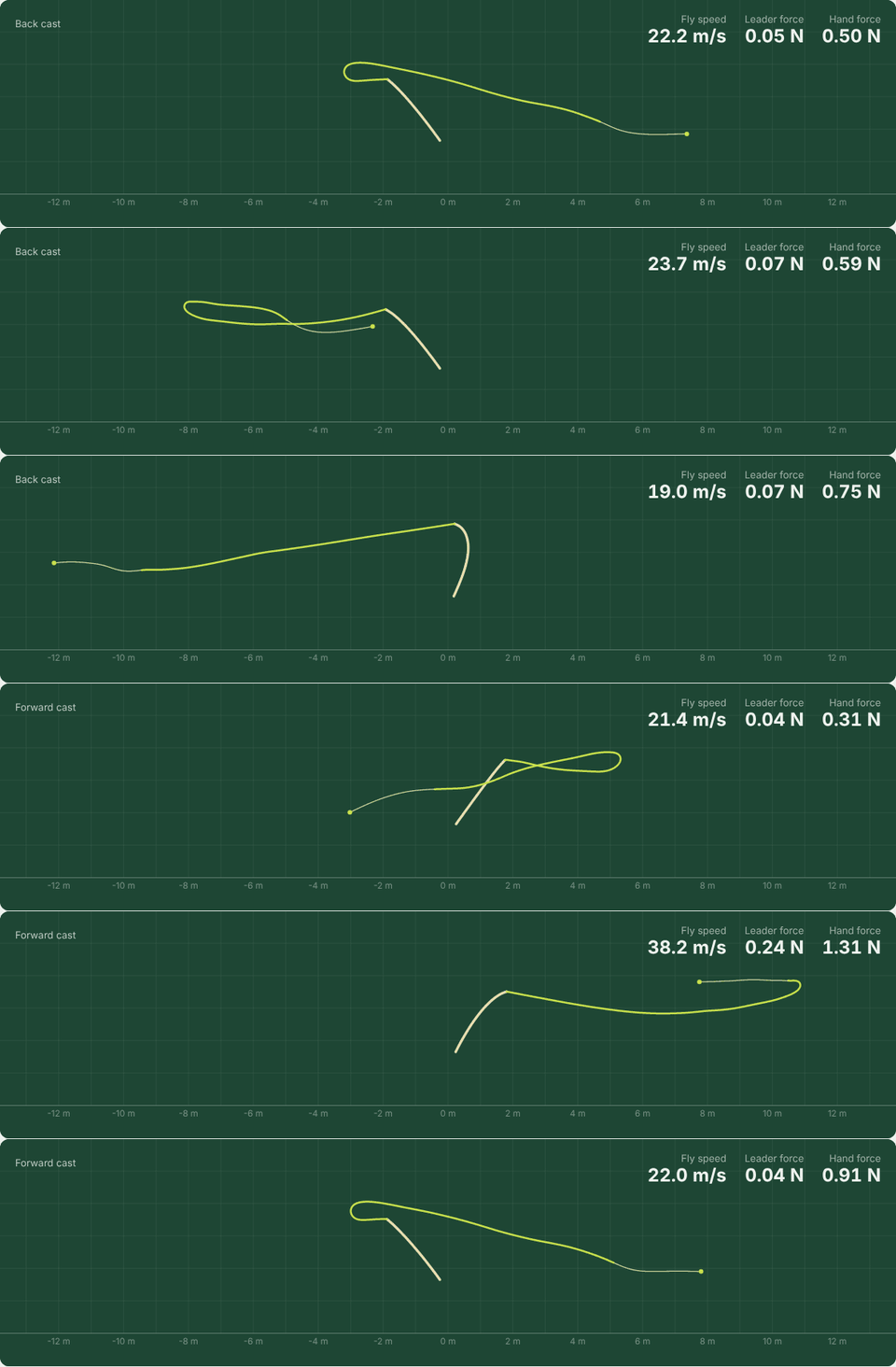
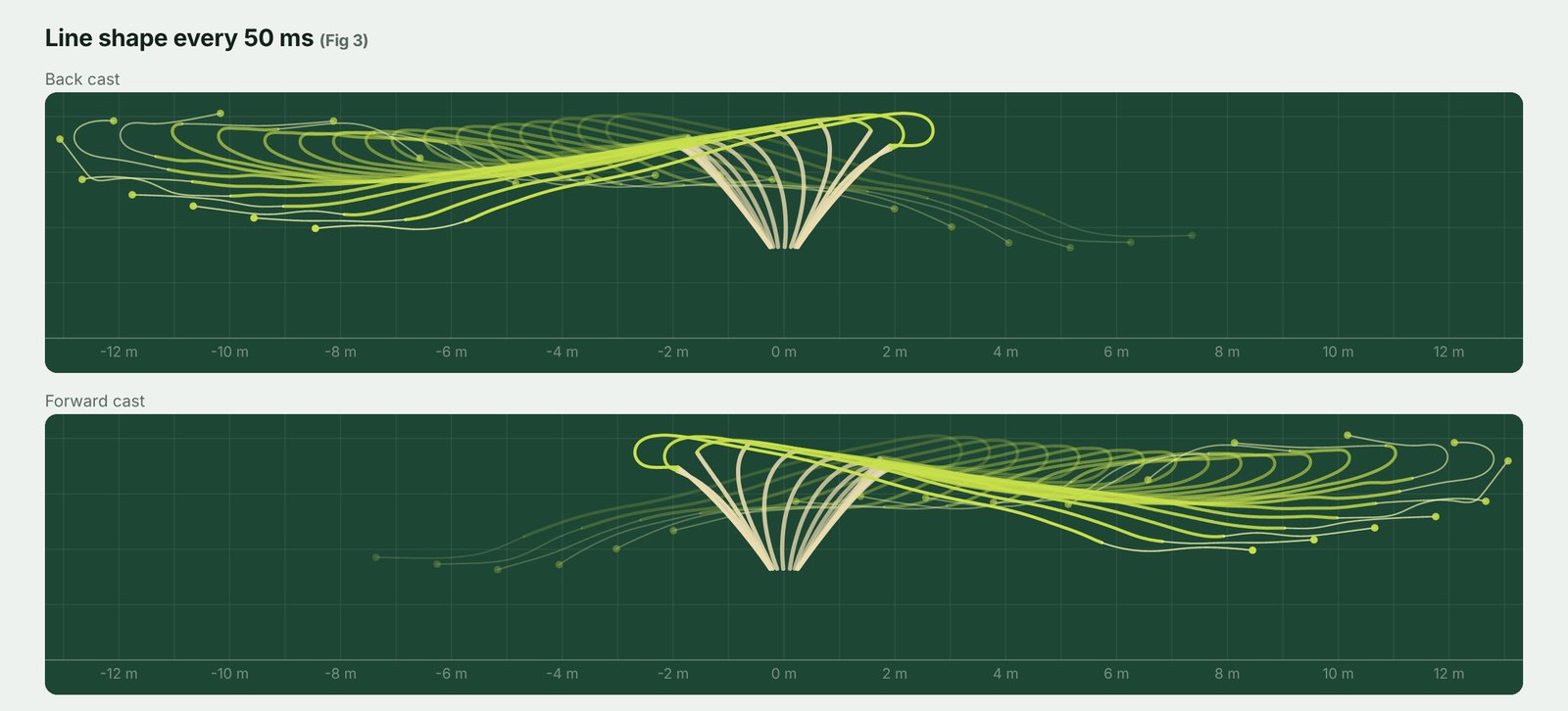
The animation plays the whole cast and can be slowed right down. Alongside it you can follow the fly speed and the force reaching the leader and the caster’s hand at every moment. The line shape every 50 milliseconds sums up the whole cycle in a single picture. You can tell at a glance whether the loop is tight or open and whether the line drops behind.
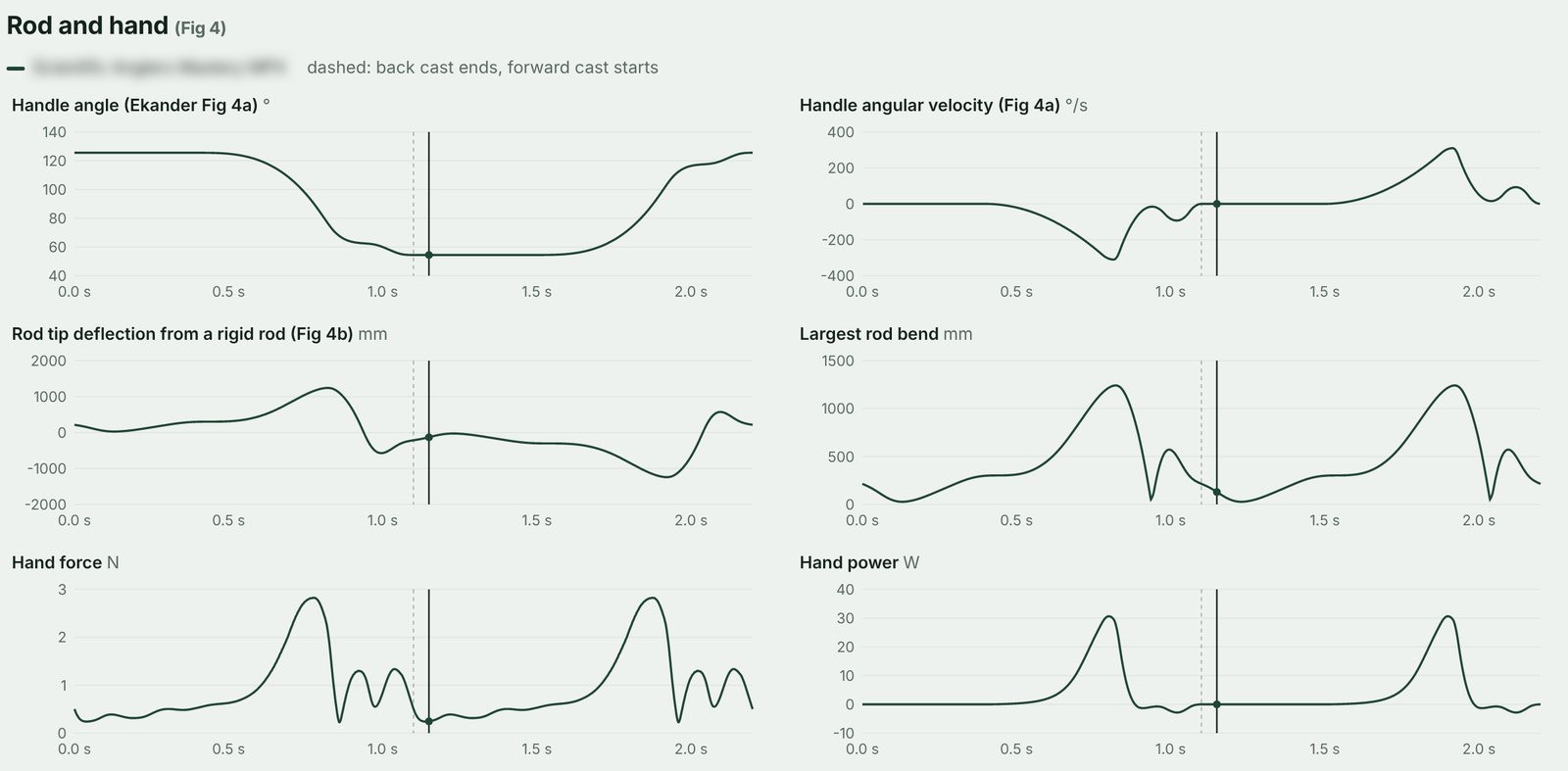
The rod graphs follow those in the paper. They show the angle of the handle and how far the rod itself bends. In this cast the tip ends up more than a metre away from where it would be on a completely rigid rod. They also show the force and power coming from the hand at every moment. Because the hand movement is always the same, you can see which taper loads the rod more and whether that comes from its design or simply its weight.
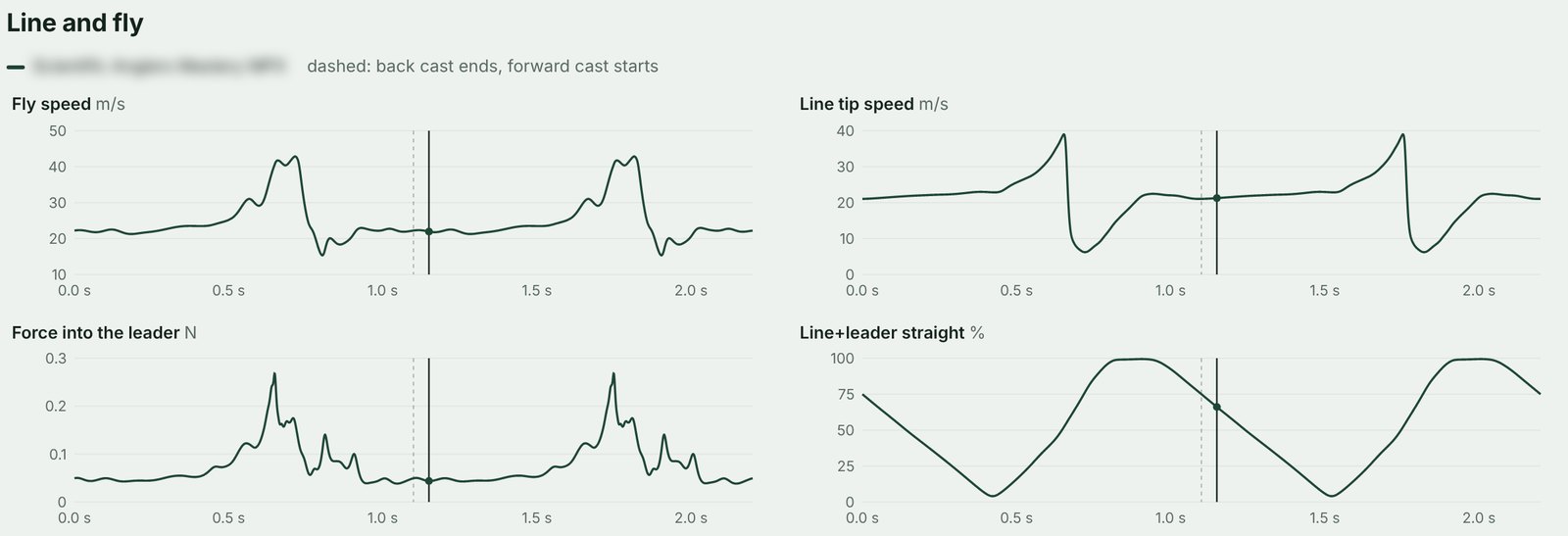
The line and fly graphs say the most about how a taper will fish. Fly speed and the force on the leader peak just as the loop finishes unrolling. That moment helps show how the line turns over the leader. A good line straightens the leader fully without the fly arriving too fast.
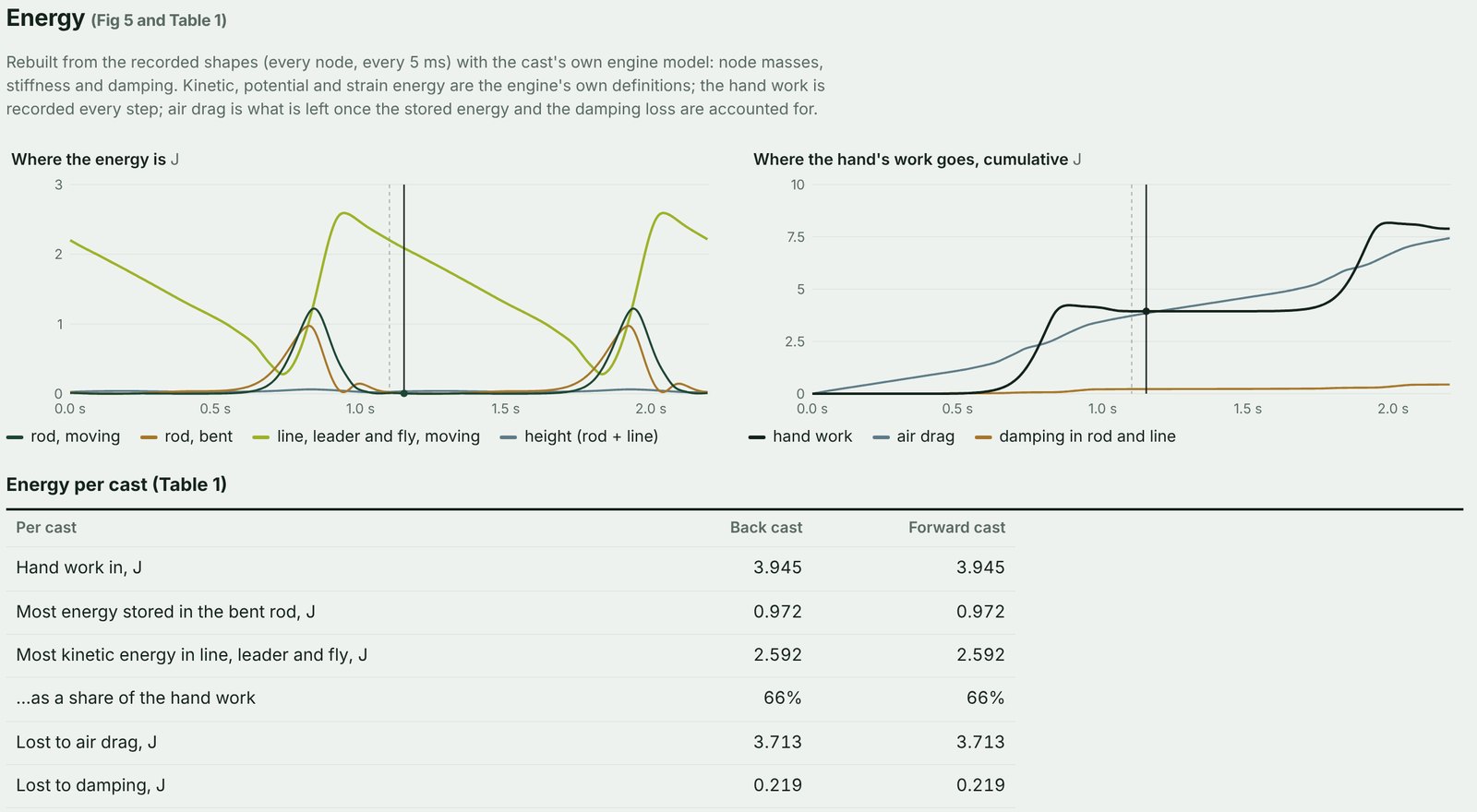
Finally there’s energy. The simulator measures how much work the hand does in each cast and how much of it is stored in the bent rod. It also tracks how much goes into the line and how much is lost along the way. In this cast the hand puts in about 4 joules and almost all of it ends up lost to the air. A taper that wastes less needs less effort for the same cast.
How it’s used
Thirty-six real lines with measured tapers have already been put through the simulator. They help show which numbers match what anglers recognise as a good line. Every new taper goes through the simulator first and is compared with lines of the same weight. That makes it possible to try dozens of variations and understand why one works better than another before anything is sent to the factory.
After that, anglers on the river will have the final say. Their impressions of the prototypes will go back into the simulator to refine the next design. It’s the way of working that best fits what I know how to do, and the one I want for Arven.